The “Silent” Ransomware: How Hackers Are Targeting Toronto Small Businesses Without You Knowing
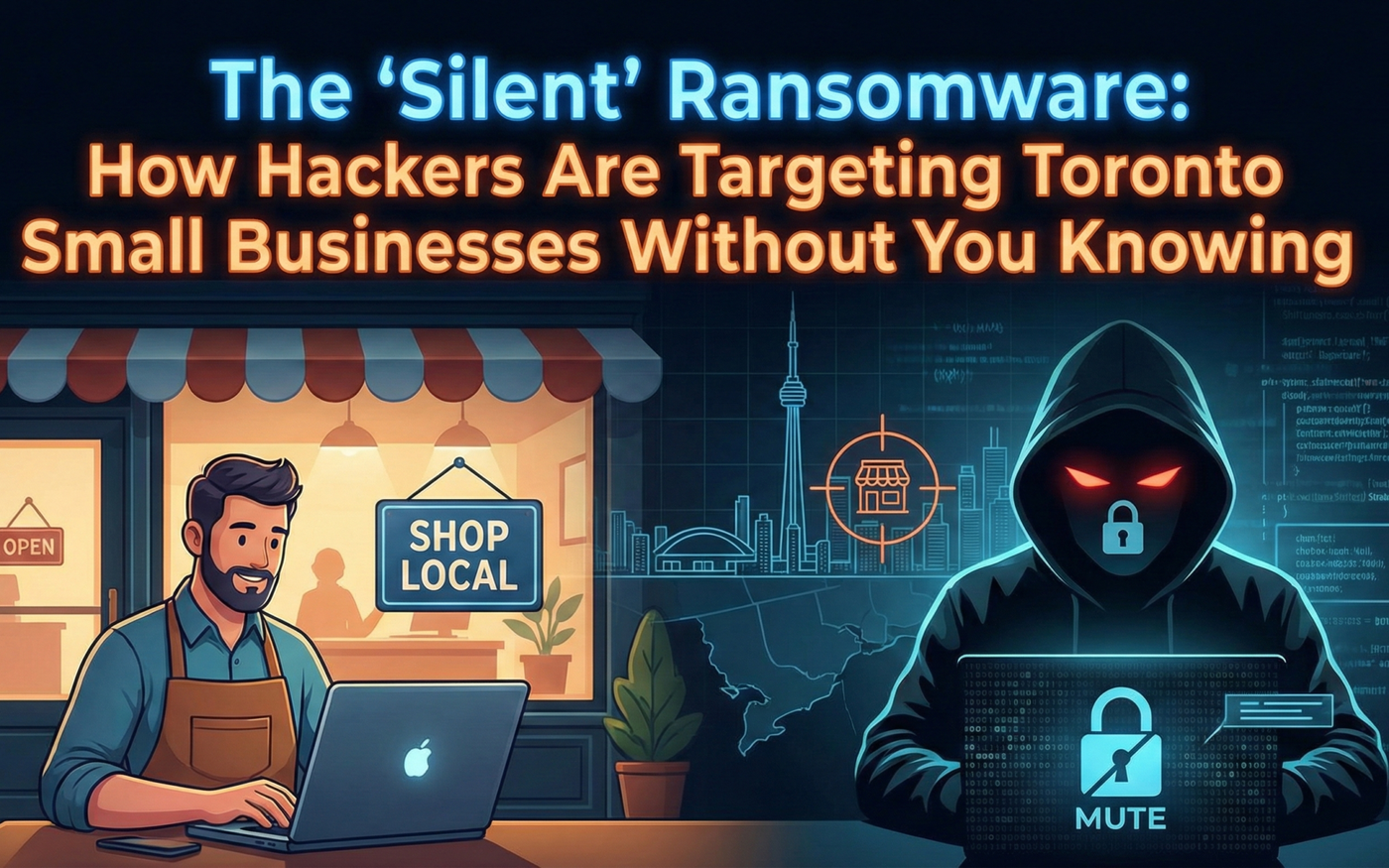
Most business owners think of ransomware like a bank robbery: loud, fast, and obvious. You come in one morning, see a red skull on your screen, and realize you’re locked out.
But that is the old way. Today’s hackers are much smarter, and much quieter.
The new threat facing Toronto SMBs is what we call “Silent Ransomware” or double-extortion. In this scenario, the hackers don’t lock your computers right away. Instead, they break in, hide, and steal your most sensitive data for weeks before you even know they are there.
The “Dwell Time” Danger
Cybersecurity experts call this “Dwell Time.” It’s the amount of time a hacker spends inside your network undetected.
The average dwell time for a small business is 11 days.
During those 11 days, they aren’t just sitting around. They are:
- Mapping your network: Finding where your backups are stored so they can delete them first.
- Reading your email: Learning how your CEO talks so they can craft convincing phishing emails to your finance team.
- Exfiltrating Data: Quietly copying your client lists, financial records, and employee SIN numbers to a server overseas.
Why “Backups” Are No Longer Enough
In the past, if you got hacked, you could just restore from a backup and ignore the ransom demand.
With Silent Ransomware, that doesn’t work. Even if you restore your data, the hackers still have a copy of your private files. They will email you proof and say: “Pay us $50,000, or we will email your client list to your competitors and post your employee records on the dark web.”
This is why prevention is now infinitely cheaper than the cure.
3 Signs You Might Be a Victim Right Now
Because these attacks are designed to be stealthy, they are hard to spot without professional tools. However, there are subtle red flags:
1. Internet Slowness at Odd Hours
If your internet connection feels sluggish late at night or on weekends, it might be because massive amounts of data are being uploaded from your server to the hacker’s cloud.
2. New “Admin” Accounts
Hackers often create a new user account with generic names like “Admin2” or “Support_User” to maintain access if you change your own password.
3. Disabled Antivirus
If your antivirus software suddenly turns off or won’t update, it’s often the first thing a hacker disables once they gain admin access.
Don’t Wait Until It’s Too Late
Traditional antivirus cannot stop Silent Ransomware. You need EDR (Endpoint Detection & Response)—technology that hunts for hackers actively moving inside your network.
Let us scan your network for hidden threats before they lock you out.
Book a Free Security Audit